


Dancing Heroes
Dancing Heroes Glamour - Marzo 2018
di Nina Verdelli | ph. Luca Babini
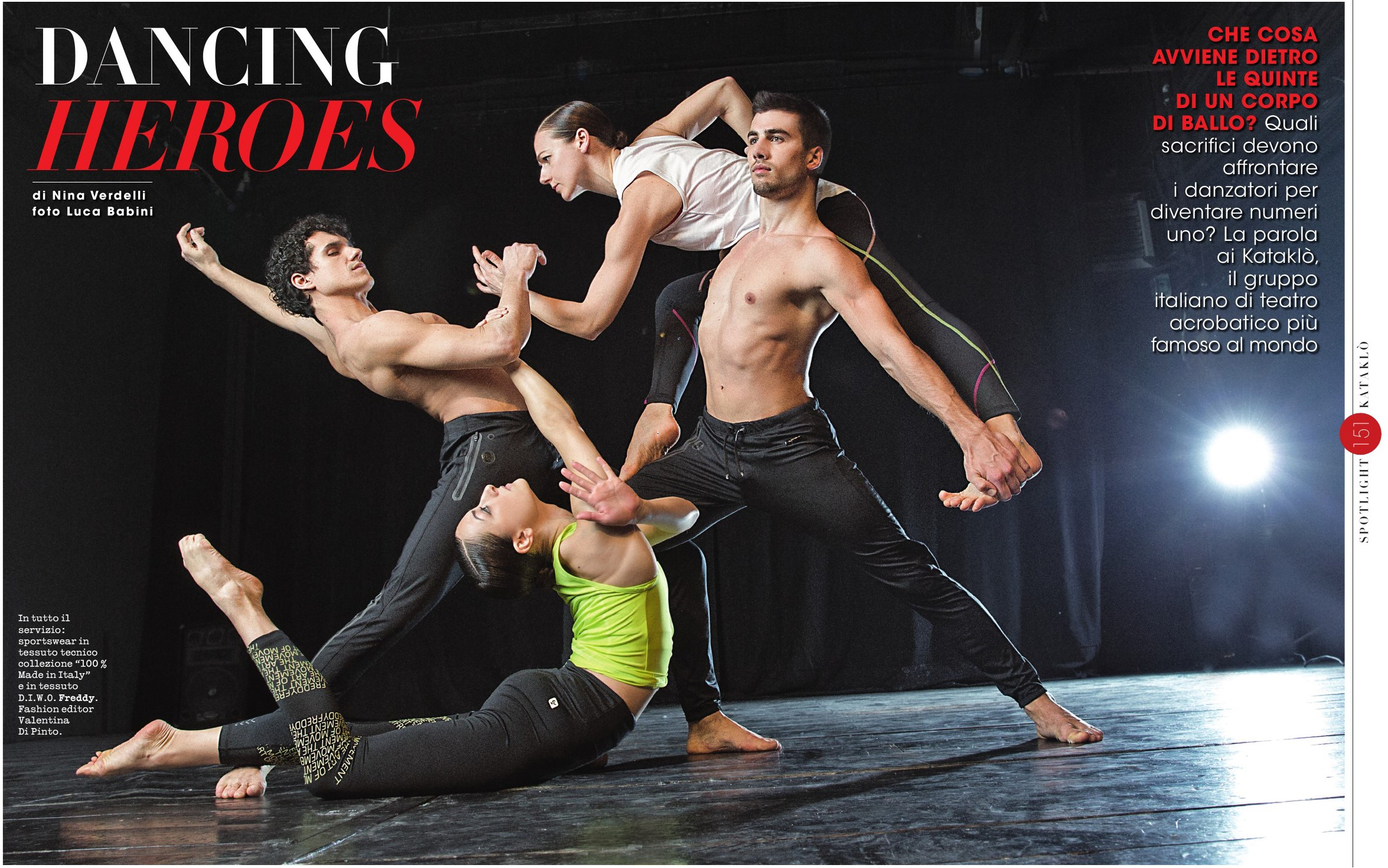
Che cosa avviene dietro le quinte di un corpo di ballo? Quali sacrifici devono affrontare i danzatori per uno? La parola ai Kataklò, il gruppo italiano di teatro acrobatico più famoso al mondo.
Non esistono danzatori perfetti. L’importante è che i danzatori siano desiderosi di esserlo. I Kataklò lo sono. Mentre balliamo noi ci scaviamo dentro. E quello che troviamo lo raccontiamo con il corpo.
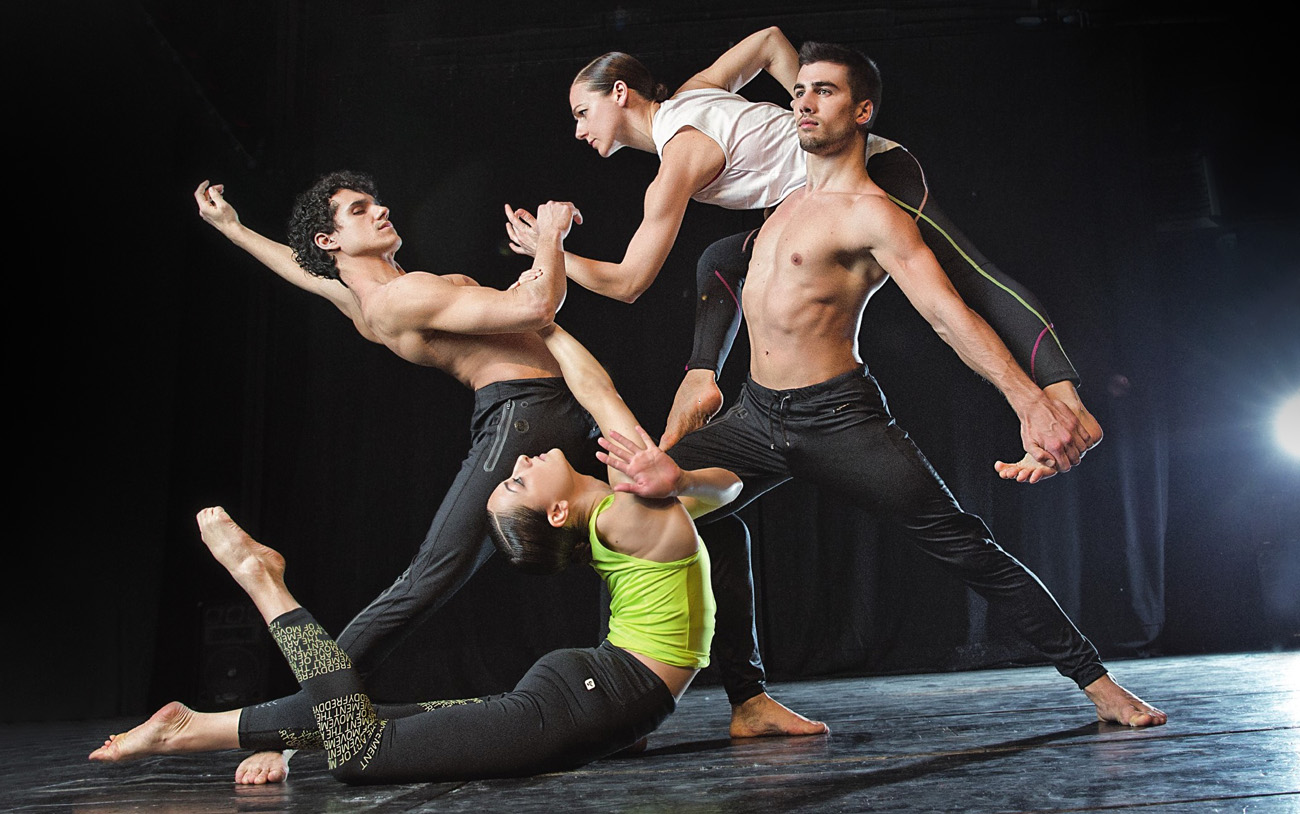
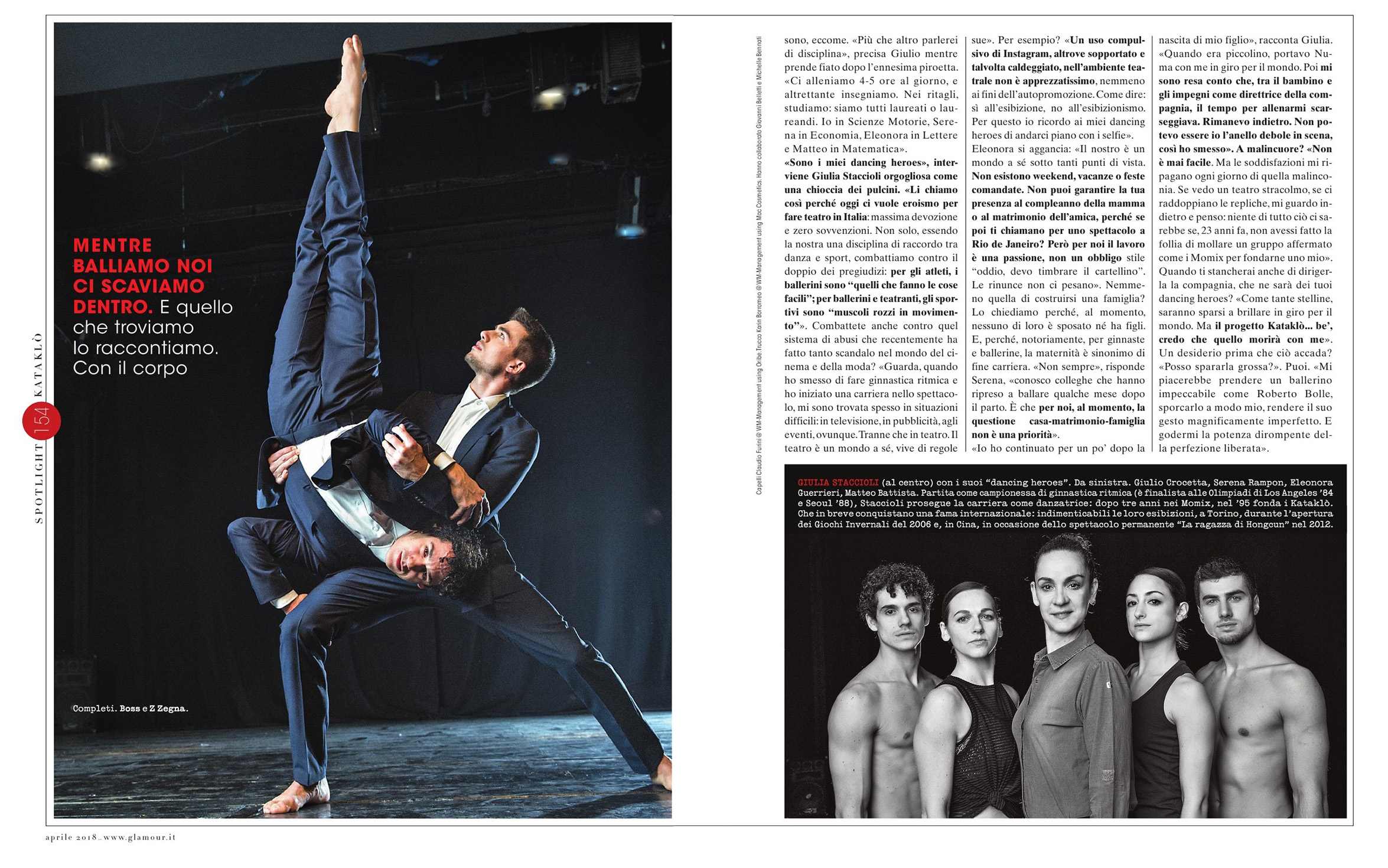
Fermatevi. Non riesco a mettere a fuoco: non capisco dove comincia l’uno e finisce l’altro, sorride il fotografo Luca Babini ai quattro danzatori intrecciati tra loro come le radici degli alberi. Le gambe
di Serena si confondono con quelle di Matteo, il braccio di Eleonora termina dove quello di Giulio inizia, formando un solo ramo che punta verso il cielo. O meglio, verso il soffitto del Teatro Avirex di Milano.
Sul palcoscenico sta andando in scena uno show a porte chiuse: prima che, quest’estate, riempiano le piazze di tutta la penisola con lo spettacolo Summer Eureka, i Kataklò oggi si esibiscono in esclusiva per Glamour.
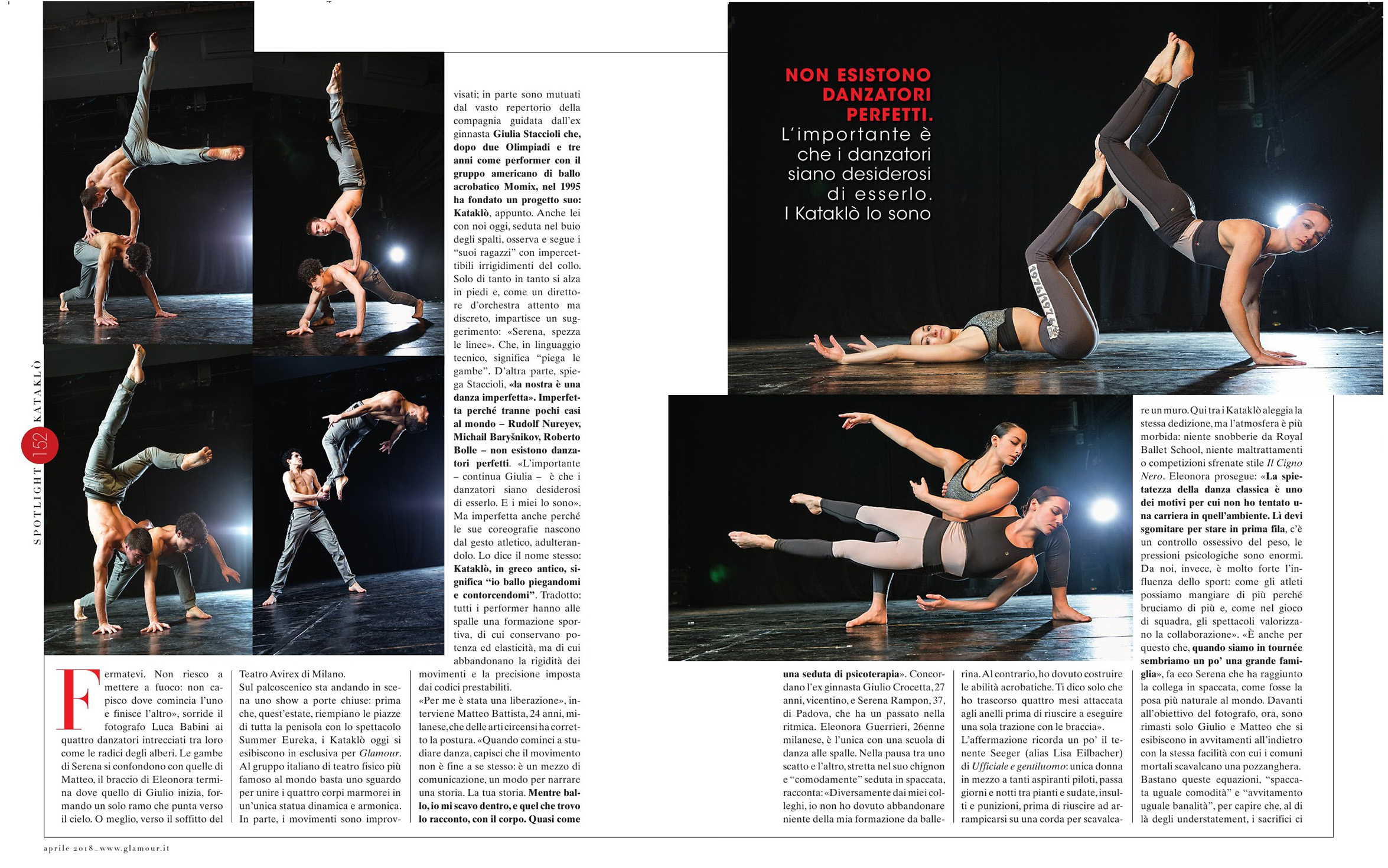
Al gruppo italiano di teatro fisico più famoso al mondo basta uno sguardo per unire i quattro corpi marmorei in un’unica statua dinamica e armonica. In parte, i movimenti sono improvvisati; in parte sono mutuati dal vasto repertorio della compagnia guidata dall’ex ginnasta Giulia Staccioli che, dopo due Olimpiadi e tre anni come performer con il gruppo americano di ballo acrobatico Momix, nel 1995 ha fondato un progetto suo: Kataklò, appunto. Anche lei con noi oggi, seduta nel buio degli spalti, osserva e segue i “suoi ragazzi” con impercettibili irrigidimenti del collo. Solo di tanto in tanto si alza in piedi e, come un direttore d’orchestra attento ma discreto, impartisce un suggerimento: «Serena, spezza le linee». Che, in linguaggio tecnico, significa “piega le gambe”. D’altra parte, spiega Staccioli, «La nostra è una danza imperfetta». Imperfetta perché tranne pochi casi al mondo – Rudolf Nureyev, Michail Baryînikov, Roberto Bolle – non esistono danzatori perfetti. «L’importante – continua Giulia — è che i danzatori siano desiderosi di esserlo. E i miei lo sono».
Ma imperfetta anche perché le sue coreografie nascono dal gesto atletico, adulterandolo. Lo dice il nome stesso Kataklò, in greco antico, significa “io ballo piegandomi e contorcendomi”. Tradotto: tutti i performer hanno alle spalle una formazione sportiva, di cui conservano potenza ed elasticità, ma di cui abbandonano la rigidità dei movimenti e la precisione imposta dai codici prestabiliti.
«Per me è stata una liberazione», interviene Matteo Battista, 24 anni, milanese, che delle articircensi ha corretto la postura. «Quando cominci a studiare danza, capisci che il movimento non è fine a se stesso: è un mezzo di comunicazione, un modo per narrare una storia. La tua storia. Mentre ballo, io mi scavo dentro, e quel che trovo lo racconto, con il corpo. Quasi comeuna seduta di psicoterapia». Concordano l’ex ginnasta Giulio Crocetta, 27 anni, vicentino, e Serena Rampon, 37 anni di Padova, che ha un passato nella ritmica. Eleonora Guerrieri, 26enne milanese, è l’unica con una scuola di danza alle spalle. Nella pausa tra uno scatto e l’altro, stretta nel suo chignon e “comodamente” seduta in spaccata, racconta: «Diversamente dai miei colleghi, io non ho dovuto abbandonare niente della mia formazione da ballerina. Al contrario,ho dovuto costruire le abilità acrobatiche. Ti dico solo che ho trascorso quattro mesi attaccata gli anelli prima di riuscire a eseguire una sola trazione con le braccia».
L’affermazione ricorda un po” il tenente Seeger (alias Lisa Eilbacher) di Ufficiale e gentiluomo: unica donna in mezzo a tanti aspiranti piloti, passa giorni e notti tra pianti e sudate, insulti e punizioni, prima di riuscire ad arrampicarsi su una corda per scavalcare un muro. Qui trai Kataklò aleggia la stessa dedizione, ma l’atmosfera è più morbida: niente snobberie da Royal Ballet School, niente maltrattamenti o competizioni sfrenate stile Il Cigno Nero. Eleonora prosegue: «La spietatezza della danza classica è uno dei motivi per cui non ho tentato una carriera in quell’ambiente. Lì devi sgomitare per stare in prima fila, c’è un controllo ossessivo del peso, le pressioni psicologiche sono enormi. Da noi, invece, è molto forte l’influenza dello sport: come gli atleti possiamo mangiare di più perché bruciamo di più e, come nel gioco di squadra, gli spettacoli valorizzano la collaborazione». «È anche per questo che, quando siamo in tournée sembriamo un po’ una grande famiglia», fa eco Serena che ha raggiunto la collega in spaccata, come fosse la posa più naturale al mondo. Davanti all’obiettivo del fotografo, ora, sono rimasti solo Giulio e Matteo che si esibiscono in avvitamenti all’indietro con la stessa facilità con cui i comuni mortali scavalcano una pozzanghera.
Bastano queste equazioni, “spaccata uguale comodità” e “avvitamento uguale banalità”, per capire che, al di là degli understatement, i sacrifici ci sono, eccome. «Più che altro parlerei di disciplina», precisa Giulio mentre prende fiato dopo l’ennesima piroetta. «Ci alleniamo 4-5 ore al giorno, e altrettante insegniamo. Nei ritagli, studiamo: siamo tutti laureati o laureandi. Io in Scienze Motorie, Serena in Economia, Eleonora in Lettere e Matteo in Matematica».
«Sono i miei dancing heroes», interviene Giulia Staccioli orgogliosa come una chioccia dei pulcini. «Li chiamo così perché oggi ci vuole eroismo per fare teatro in Italia: massima devozione e zero sovvenzioni. Non solo, essendo la nostra una disciplina di raccordo tra danza e sport, combattiamo contro il doppio dei pregiudizi: per gli atleti, i ballerini sono “quelli che fanno le cose facili”; per ballerini e teatranti, gli sportivi sono “muscoli rozzi in movimento”». Combattete anche contro quel sistema di abusi che recentemente ha fatto tanto scandalo nel mondo del cinema e della moda? «Guarda, quando ho smesso di fare ginnastica ritmica e ho iniziato una carriera nello spettacolo, mi sono trovata spesso in situazioni difficili: in televisione, in pubblicità, agli eventi, ovunque. Tranne che in teatro. Il teatro è un mondo a sé, vive di regole sue». Per esempio? «Un uso compulsivo di Instagram, altrove sopportato e talvolta caldeggiato, nell’ambiente teatrale non è apprezzatissimo, nemmeno i fini dell’autopromozione. Come dire: sì all’esibizione, no all’esibizionismo. Per questo io ricordo ai miei dancing heroes di andarci piano con i selfie».
Eleonora si aggancia: «Il nostro è un mondo a sé sotto tanti punti di vista. Non esistono weekend, vacanze o feste comandate. Non puoi garantire la tua presenza al compleanno della mamma o al matrimonio dell’amica, perché se poi ti chiamano per uno spettacolo a Rio de Janeiro? Però per noi il lavoro è una passione, non un obbligo stile “oddio, devo timbrare il cartellino”. Le rinunce non ci pesano». Nemmeno quella di costruirsi una famiglia? Lo chiediamo perché, al momento, nessuno di loro è sposato né ha figli.
E, perché, notoriamente, per ginnaste e ballerine, la maternità è sinonimo di fine carriera. «Non sempre», risponde Serena, «conosco colleghe che hanno ripreso a ballare qualche mese dopo il parto. È che per noi, al momento, la questione casa-matrimonio-famiglia non è una priorità».
«lo ho continuato per un po’ dopo la nascita di mio figlio», racconta Giulia. «Quando era piccolino, portavo Numa con me in giro per il mondo. Poi mi sono resa conto che, tra il bambino e gli impegni come direttrice della compagnia, il tempo per allenarmi scarseggiava. Rimanevo indietro. Non potevo essere io l’anello debole in scena, così ho smesso». A malincuore? «Non è mai facile. Ma le soddisfazioni mi ripagano ogni giorno di quella malinconia. Se vedo un teatro stracolmo, se ci raddoppiano le repliche, mi guardo indietro e penso: niente di tutto ciò ci sarebbe se, 23 anni fa, non avessi fatto la follia di mollare un gruppo affermato come i Momix per fondarne uno mio».
Quando ti stancherai anche di dirigerla la compagnia, che ne sarà dei tuoi dancing heroes? «Come tante stelline, saranno sparsi a brillare in giro per il mondo. Ma il progetto Kataklò… be’, credo che quello morirà con me». Un desiderio prima che ciò accada? «Posso spararla grossa?». Puoi. «Mi piacerebbe prendere un ballerino impeccabile come Roberto Bolle, sporcarlo a modo mio, rendere il suo gesto magnificamente imperfetto. E godermi la potenza dirompente della perfezione liberata».
Fonte: https://moda.mam-e.it/missoni/
Regia: Tommaso Ottomano
Performers: Eleonora Guerrieri Matteo Battista Stefano Ruffato Carolina Cruciani Sara Palumbo Simone Paris